


Living soil indoors can thrive with the right balance of biology and control. Learn practical strategies for cover crops, chop-and-drop, mulch, and no-till.
Bringing Living Soil Indoors
There’s a strong appeal to living soil systems, especially when you start looking into how natural ecosystems function. The idea of multiple plant species working together, a constant cycling of organic matter, and a self-sustaining soil food web is compelling. And in the right context, it works extremely well.
The issue is that most of these ideas come from outdoor agriculture, where systems are open, buffered, and naturally self-regulating. When you try to apply the same approach inside a controlled environment, things behave differently. Space is limited, inputs are concentrated, and populations can increase very quickly.
What follows isn’t a criticism of living soil methods. It’s a practical look at where things tend to go wrong, and how to use these techniques without creating more problems than you solve.
Cover Crops: Useful, but Not Passive
Cover crops, or living mulches, are often one of the first things people introduce. Clover, vetch, grasses, buckwheat, and even creeping species like dichondra. The logic is sound. More roots in the soil means more exudates, more microbial activity, better structure, and improved moisture retention. It also just looks good. A diverse, green surface feels like a healthy system. And to be fair, it can work really well. Where people get caught out is forgetting that a cover crop is not just ‘soil support’, it’s another crop entirely. It feeds, it drinks, and it hosts pests.
Pest pressure is usually the first issue. Growers are generally quite good at inspecting their main plants, checking leaves for mites, thrips, or aphids. But the cover crop sits lower down, often dense and harder to see into, and it doesn’t get the same attention. Species like clover are commonly observed to act as hosts for pests such as thrips and spider mites, so it’s very easy to build a population there without noticing, and then have it move onto your main crop.
Then there’s competition. In a field, this is less of a concern because the system is large and inputs are distributed. For living soil indoors, in a pot or even a bed, everything is competing in the same confined volume. Fast-growing cover crops, especially grasses, will quickly pull nitrogen from the soil. If you’re not accounting for that, your main plant will feel it.
Water is another subtle one. A cover crop increases overall demand and can change how the soil dries. You can end up with a surface that looks dry but is still holding moisture deeper down, or the opposite. Either way, your irrigation becomes less straightforward.
None of this means you shouldn’t use cover crops. It just means you need to treat them as an active part of the system. They need feeding, managing, and inspecting in the same way your main crop does. If you’re not prepared to do that, they tend to cause more issues than they solve.
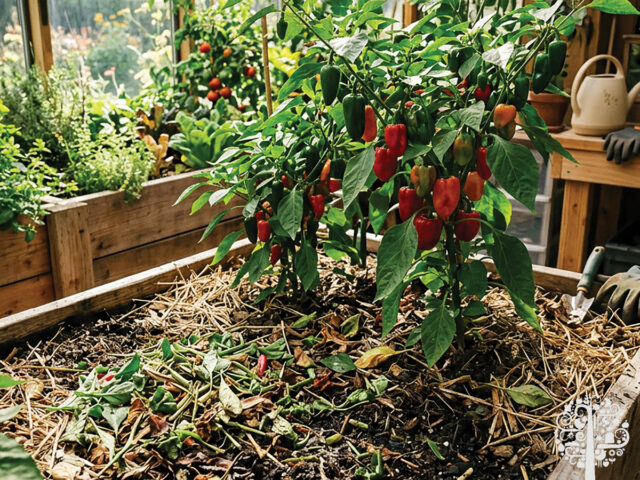
Chop and Drop: Where Good Intentions Overload the System
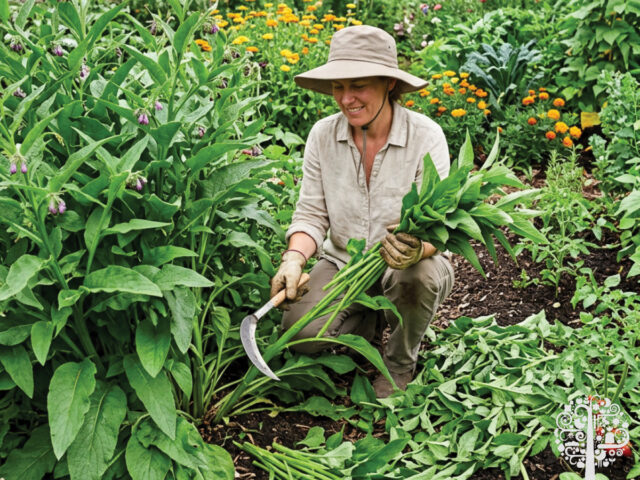
Chop and drop is one of those techniques that makes perfect sense on paper. You grow biomass, cut it down, and return it to the soil. Nutrients cycle, biology is fed, and you build organic matter over time. Again, the concept is sound. The problem is scale.
What I see repeatedly is growers putting down large amounts of fresh plant material in one go, especially after letting a cover crop build up. When that material hits the soil surface, you’re not just feeding microbes. You’re feeding everything. You get a surge in biological activity, which is the intended effect, but alongside that, you get a rapid increase in detritivores like springtails and woodlice. In normal numbers, these are beneficial. They break down material and contribute to nutrient cycling. But if you give them a constant surplus of fresh, high-quality food, their populations will expand quickly.
At that point, behavior can change. Under high population pressure, particularly if food availability drops or the soil dries slightly, springtails have been observed to opportunistically feed on softer plant tissues, including root hairs of new transplants. Whether it’s direct feeding or incidental damage, the result is the same: poor establishment and stalled growth.
There’s also the issue of nitrogen being tied up during decomposition, especially where large volumes of material are added or where overall carbon levels are elevated. The system has to process that material, and in the short term, that can reduce nitrogen availability to the plant.
The fix is straightforward: don’t treat chop-and-drop as a bulk input. Smaller, more frequent additions are far more stable. If you’ve got a lot of plant material, it’s often better to compost it separately or dry it and bring it back in gradually. You still get the benefit, just without the spike in activity that causes problems.
Feeding the System Means Feeding Everything
This becomes even more apparent when you start looking at insects in the system.
Take rove beetles, for example, commonly introduced for fungus gnat and thrip control. They’re effective predators, but they’re not strictly selective. In systems where nutrient-rich top dressings are applied, particularly those containing frass, fish meal, bone meal, or other protein sources, they have been observed feeding on these inputs as well as prey.
So now you’ve created a situation in which your pest control organism is also supported by your fertility inputs. Their population increases, and once it does, they don’t just stay in the soil. At higher population densities, or when disturbed, they can become more mobile. They climb plants and, in some cases, take flight.
That’s where it becomes a real issue. In enclosed environments, they can end up in the canopy and, in worst cases, stuck in flowers. If you’re producing a harvested product, you don’t want to deal with that.
There’s a broader point here. Increasing biological diversity sounds like a good thing, but every addition brings more interactions. More interactions mean more variables, and in a controlled environment, that usually means more ways for things to go wrong.
For soil pests, more targeted approaches tend to be more reliable. Steinernema feltiae nematodes provide a rapid knockdown of fungus gnat larvae, and predators like Stratiolaelaps/Hypoaspis offer longer-term suppression. They are more predictable and don’t introduce the same level of system-wide complexity.
Mulch Layers: Keep It Light
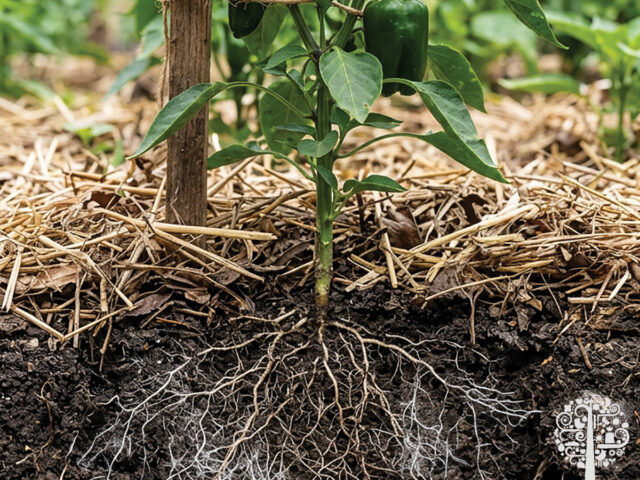
Mulch is another area where more is often seen as better. Thick layers of straw or hay are often used to mimic a forest floor. In practice, for living soil indoors, that’s rarely necessary and can create issues.
A thick mulch layer retains moisture and reduces airflow at the soil surface. This can create conditions that favor saprophytic organisms, including botrytis. Botrytis is naturally present in most environments and will readily colonize decaying organic matter. Under favorable conditions, it can then move onto living plant tissue.
You also begin to limit gas exchange at the surface, creating a more stable habitat for pests and detritivores. The reality is you don’t need much. A light, loose layer that just shades the soil and reduces evaporation is enough. Something that lattices together without compacting. You’re aiming to protect the surface, not bury it.
No-Till: Useful, but Not a Rule
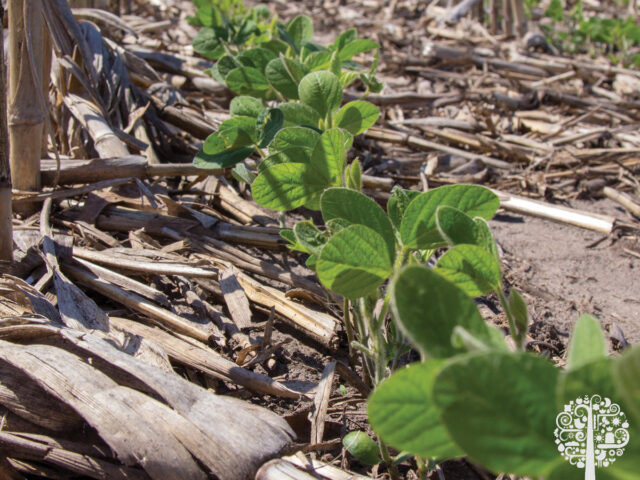
No-till is often treated as a core principle of living soiland it does have clear benefits. Less disturbance, preserved structure, and reduced labor. But it’s not always the best option in a controlled system, especially over multiple cycles.
In some systems, nutrients from top dressings tend to remain concentrated in the upper layer for longer than intended. At the same time, repeated watering and root cycling can lead to gradual structural changes. In container systems, especially, this can show up as slight compaction over time and less consistent root anchoring.
Biology will redistribute nutrients, particularly in systems with active worm populations, but it takes time. If you’re running fast cycles and want consistent results, that delay can work against you.
Lightly mixing amendments into the top 6 to 10 inches between cycles is often a more reliable approach. It ensures more even nutrient distribution, improves early root access, and gives you a chance to assess and correct soil structure. If compaction is present, it can be addressed at that point.
This doesn’t mean abandoning no-till completely. A hybrid approach tends to work well. Leave the soil undisturbed when it’s performing, and intervene when it starts to drift.
Final Thoughts
Most of these techniques are built on solid principles. Cover crops, mulch layers, chop-and-drop, beneficial insects, and no-till. They all have a place, and they all work under the right conditions. Where things go wrong is in assuming that more is always better, or that mimicking nature as closely as possible will automatically lead to better results.
In reality, living soil systems don’t behave like natural ecosystems. They’re smaller, more intense, and far less forgiving. If you add a food source, the population will grow. Adding complexity increases the number of variables you need to manage.
The most reliable living soil systems aren’t the most complex. They’re the ones where inputs are controlled, changes are deliberate, and biology is encouraged without running unchecked. That may be less romantic than the idea of a fully self-regulating ecosystem, but it’s what tends to work in practice.
For more on Living Soils, take some time to watch the Living Soil Filma must-watch!
