

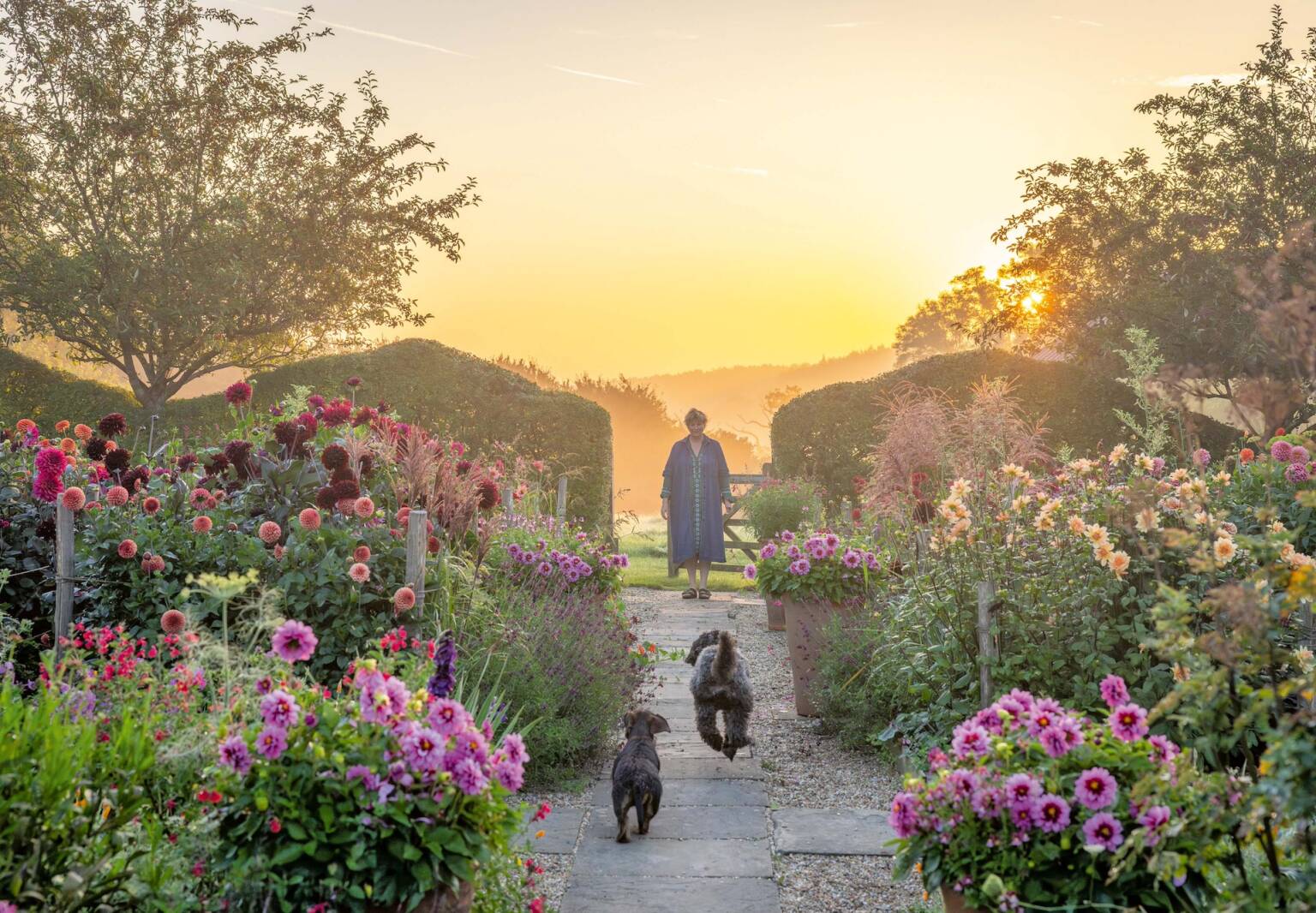
“I know many gardeners share this feeling: cutting flowers is stealing the view and that splendid delphinium, huge pom pom peony, or lupine spear are best left growing outside,” writes world-renowned gardening expert and best-selling author Sarah Raven in her new book, A Year of Cut Flowers: A Life of Growing and Arranging for All Seasons. But if you select the right types—annuals, biennials and dahlias—and pick them correctly at the right time, she says, you actually promote bud formation and create the potential for more flowers. Her credo is: the more you pick, the more they flower.
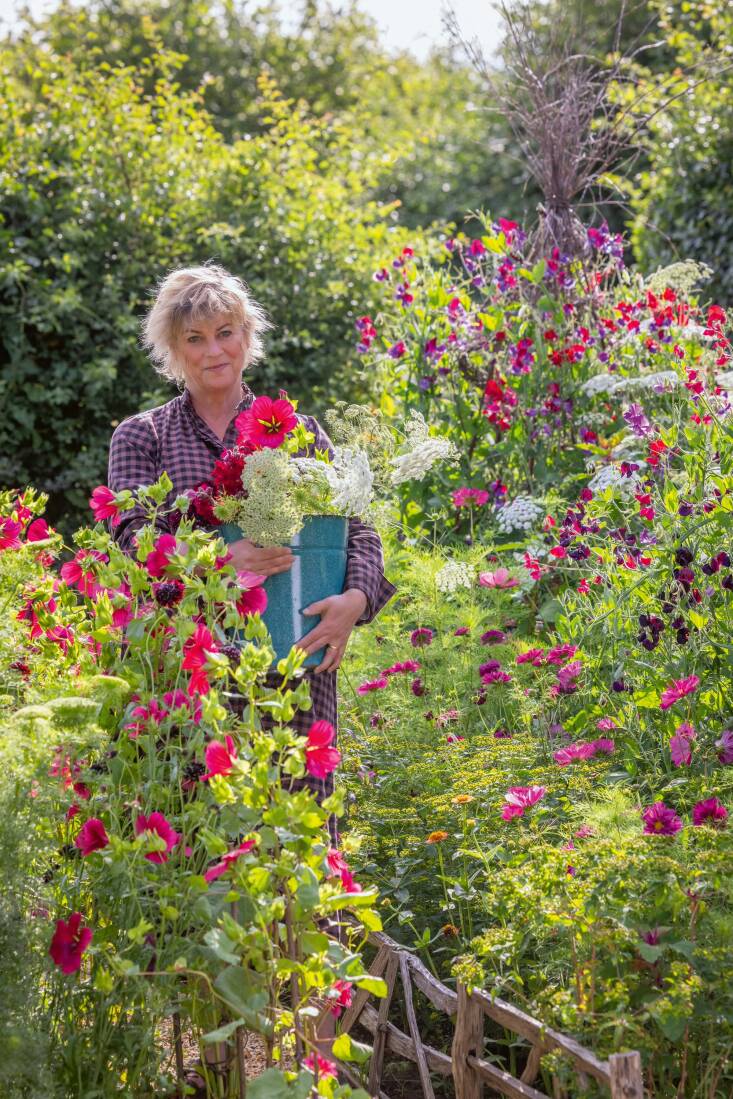
It’s true that Sarah has no formal floral training, but that means little when you consider she’s had decades of hands-on experience and is the author of 14 books on gardening. To us, she describes herself as “an enthusiast who’s restless yet quite grounded, hard-working and creative, and most at ease in nature with good friends and family, not at a party.”

Over the years Sarah’s obsession with cut flowers has literally and figuratively grown. A Year of Cut Flowers is the culmination of all those decades of planting, growing, picking, assessing, and arranging almost every day (these days with the help of five talented team members): As such, you’ll find plenty of cut flower inspiration and practical advice in the book. In addition, Raven shares how she decides what to grow in the first place, how many to plant, and which plants should be the backbone of any cutting garden, regardless of the size of your garden plot. “There are high-production groups which give you a lot from a little,” she explains. In the book, Sarah also answers everyone’s perennial question about cut flowers: how to make them last. (Her cardinal rule: “don’t pick and plonk. Instead, pick, condition, rest and then arrange.”)
